- Feb 6, 2025
Quantum Computing Threats Loom as The Blockchain Gaming Market Soars-Vol. 2, #6
- TekBeacon Core Technologies
- TekBeacon Signals Archive
- 0 comments
AI & Machine Learning
Google now allows AI use for weapons and surveillance 🔍
At a Glance:
Google has revised its AI principles, removing bans on military and surveillance applications, raising ethical concerns and potentially influencing broader industry practices towards militaristic uses of AI technology.
● Google has lifted its previous ban on using AI for weapons and surveillance, changing its operational principles.
● The revised guidelines allow exploration of sensitive AI applications without a list of banned technologies.
● Employees express concern over the shift towards militaristic AI usage amid insufficient internal discussion or accountability.
● The policy change raises ethical questions and could influence other tech firms to adopt similar militaristic practices.
Why this matters:
By lifting its previous ban on weapons and surveillance applications for AI, Google has opened the door for potentially harmful militaristic usage of technology, raising significant ethical concerns within the tech community. This shift not only risks setting a troubling precedent for other companies but also highlights the urgent need for more robust internal and external accountability measures in AI development, especially amid increasing global military tensions. As leading firms adapt, the responsibility to ensure that technology serves humanity, rather than exacerbating conflicts, becomes more critical than ever.
IoT & Connected Systems
NTT Data launches AI agent to enhance Generative AI 🌍

At a Glance:
NTT Data launched a smart AI agent to enhance Generative AI adoption, automating tasks to improve efficiency and address labor shortages, targeting U.S., China, and European markets.
● NTT Data has launched a smart AI agent to promote the adoption of Generative AI across various sectors.
● The AI agent automates tasks like extraction and organization, enhancing efficiency through task planning and collaboration.
● This initiative aims to tackle global labor shortages by automating repetitive tasks and improving workforce focus.
● NTT Data plans to target markets in the U.S., China, and Europe, with broader deployment anticipated soon.
Why this matters:
NTT Data's launch of a smart AI agent to drive Generative AI adoption marks a pivotal moment in addressing workforce challenges and operational inefficiencies across multiple sectors. By automating repetitive tasks, this technology not only eases labor shortages but also empowers employees to engage in higher-level strategic work, fundamentally reshaping industry dynamics. The focus on extensive markets, including the U.S. and Europe, underlines the urgency and opportunity for businesses to leverage innovative solutions in a competitive landscape.
Blockchain
Blockchain gaming market to grow significantly by 2032! 🚀

At a Glance:
The Blockchain in Gaming market is forecast to grow from $7.89 billion in 2023 to $301.76 billion by 2032, driven by NFT integration and decentralized platforms.
● The Blockchain in Gaming market is projected to grow from USD 7.89 billion in 2023 to USD 301.76 billion by 2032.
● Key players like Dapper Labs and Animoca Brands are leading the integration of blockchain technology in games.
● The use of NFTs for in-game assets fosters player ownership and reshapes interactions within gaming environments.
● Challenges such as scalability and regulatory uncertainties could impact the future growth of blockchain gaming.
Why this matters:
The explosive growth of the Blockchain in Gaming market indicates a significant shift in how players interact with digital assets, enhancing ownership and engagement. However, industry players must navigate potential scalability and regulatory challenges to fully capitalize on the economic opportunities presented by this transformative technology, which could redefine the gaming landscape for years to come.
Quantum computing
Bitcoin adapts to counter quantum computing threats 🔒

At a Glance:
As quantum computing evolves, researchers suggest Bitcoin must adopt quantum-resistant technologies like Lamport signatures to safeguard decentralized structures against potential market control by quantum miners.
● Quantum computing advancements raise concerns about the security of Bitcoin's digital signatures and hash functions.
● Researchers are exploring quantum-resistant alternatives like Lamport signatures to secure Bitcoin’s infrastructure from emerging threats.
● Transitioning to new systems for Bitcoin security could occur without causing major disruptions for users.
● Quantum miners pose a potential threat, risking the decentralization of the Bitcoin network and community.
Why this matters:
As quantum computing technology evolves, its ability to potentially compromise Bitcoin’s security necessitates proactive adaptations within the cryptocurrency community. Researchers are already looking into quantum-resistant alternatives, which may allow Bitcoin to maintain its decentralized structure. Failure to address these issues could lead to a shift from a decentralized network to an oligopoly controlled by a few powerful quantum miners, fundamentally altering the cryptocurrency landscape and undermining the original ethos of Bitcoin.
Robotics & Automation
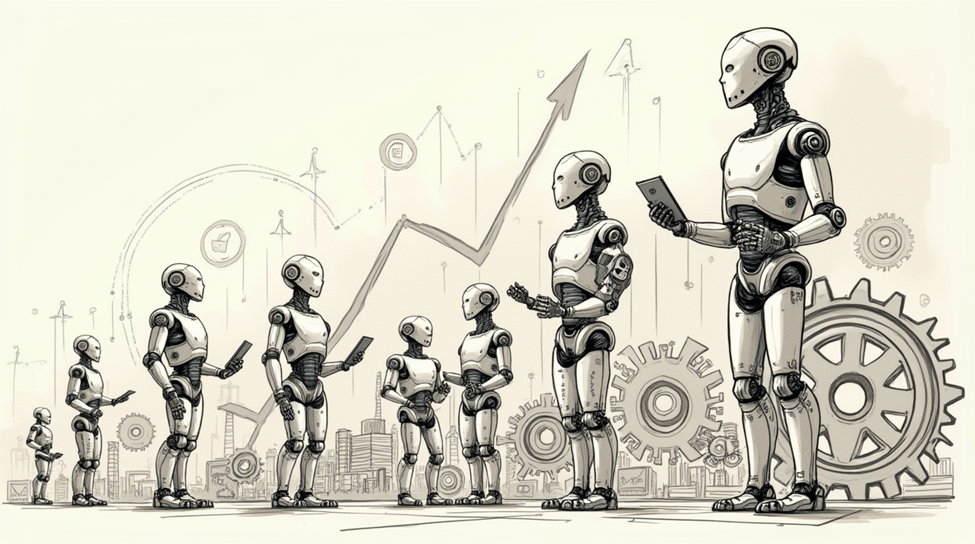
AI and robotics revolutionize industries, boost economic growth! 🚀
At a Glance:
The AI and robotics revolution is reshaping industries with significant growth, particularly in Asia-Pacific, driven by innovations in automation, AI, and sustainability-focused practices for future investments.
● The AI and robotics revolution is rapidly transforming industries, driving significant growth in the market.
● In 2023, professional service robot sales rose 30%, largely focused in the Asia-Pacific region.
● Experts predict substantial growth in automation markets, spurred by advancements in AI and machine learning.
● The future of automation emphasizes sustainability, prompting a shift towards eco-friendly business practices and investment opportunities.
Why this matters:
The rise of AI and robotics marks a significant turning point in industrial evolution, outlining a future where efficiency and sustainability reign. With a staggering 30% increase in service robots, especially from the Asia-Pacific region, businesses are poised to leverage these technologies for transformative growth. This not only opens investment avenues for savvy stakeholders but also sets the stage for a greener economy, showcasing the necessity of adapting to innovate and thrive in an increasingly automated world. Understanding these trends is essential for navigating future market dynamics.
Nanotechnology
AI enhances molecular precision for electronics advancements ⚛️

At a Glance:
TU Graz researchers are leveraging AI to autonomously and precisely position individual molecules on substrates, aiming to revolutionize nanotechnology and advance nanoscale electronics and quantum computing applications.
● Researchers at TU Graz are using AI to enhance the precision of autonomous molecular positioning on substrates.
● A proposed self-learning AI system aims to construct complex molecular structures efficiently without human intervention.
● This technology has the potential to advance the development of nanoscale electronics and quantum computing applications.
● The multidisciplinary team combines expertise from AI, mathematics, and chemistry to ensure successful implementation.
Why this matters:
The integration of AI in nanotechnology represents a transformative leap, enabling rapid and precise molecular construction that could redefine electronics and quantum computing. As researchers shed manual techniques in favor of autonomous systems, this shift promises to minimize errors, enhance efficiency, and facilitate the creation of innovative materials, positioning TU Graz at the forefront of groundbreaking technological advancements. The interdisciplinary collaboration further underscores the need for diverse expertise to tackle complex challenges, potentially setting the stage for revolutionary developments in various scientific fields.